
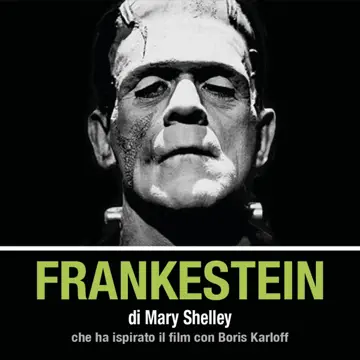
Frankenstein
Italiano
Apple Books
560+ Gothic, Supernatural, Weird, and Psychological Horror Classics
Mary Shelley, H. P. Lovecraft, H.G. Wells, Edgar Allan Poe, Henry James, Hugh Walpole, M. R. James, Wilkie Collins, E. F. Benson, Nathaniel Hawthorne, Ambrose Bierce, Arthur Machen, William Hope Hodgson, Arthur Conan Doyle, Grant Allen, Bram Stoker, Theophile Gautier, Richard Marsh, Joseph SheridanQuesta edizione è in un’altra lingua. Trova libri nella tua lingua ↗
Questa edizione non risulta disponibile in questo paese. Scegli un altro store.
The Horror Beyond Life's Edge assembles more than 560 macabre classics, supernatural mysteries, and dark tales into an expansive map of the uncanny. Moving from Gothic ruins, revenants, and forbidden manuscripts to psychological dread, occult speculation, maritime terror, and cosmic nightmare, it encompasses melodrama, satire, folktale, sensation fiction, and proto-science fiction. Hauntings, doubles, cursed objects, and encounters with the inhuman emerge as especially striking recurrent forms, revealing horror's power to make domestic, historical, and metaphysical anxieties legible. Its contributors span the long nineteenth century through the early twentieth, bringing together British, American, French, German, Russian, and other transnational traditions. Canonical novelists appear beside periodical writers, popular sensationalists, spiritualist commentators, and early speculative-fiction innovators; women writers are importantly represented among explorers of haunted homes, social constraint, and female vulnerability. The volume traces the converging legacies of Gothic romance, Decadence, fin-de-siècle occultism, Victorian ghost fiction, and modern cosmic horror, showing how distinct cultural settings repeatedly reshape fear. Recommended for students, scholars, and devoted readers of the fantastic, this capacious anthology offers an unusual opportunity to compare hundreds of voices within a single volume. Its breadth supports both sustained study and serendipitous reading, while the dialogue among its tales illuminates changing ideas of death, knowledge, identity, and the limits of human experience.
Italiano
Apple Books